
Resources
BLogs
Latest Blogs

5 Reasons Your Pipeline Looks Full But Revenue Stays Unpredictable (And the Leading Indicators Founders Actually Miss)
You're staring at your CRM, and the pipeline numbers look solid. Maybe even great. There's a healthy six-figure (or seven-figure) value sitting in there, deals spread across various stages, and your team swears they're "working" everything. Yet...
Your Sales Coaching Isn’t Sticking (And It’s Costing You Money): The Behavior vs. Training Gap
You’ve invested in sales coaching. Or at least, you thought you did. Maybe it was that three-day workshop with the slick facilitator. Maybe you brought in a “sales guru” who promised to transform your discovery process. Your reps nodded enthusiastically, took notes,...

Founder-Led Sales to Repeatable System: 5 Steps to Scale Beyond Referrals
You're the founder. You know your product better than anyone. And if we’re being honest…your “sales strategy” is mostly: be good, be liked, and know people. That works—until it doesn’t. Let’s lead with the three founder pains nobody puts on the pitch deck: 1) The...
7 Sales Discovery Questions That Uncover Why Deals Actually Stall (Not Why Buyers Say They Do)
You've heard it a hundred times: "We need to review our budget," or "Let's circle back next quarter," or the classic "Send me more information." Your deal was progressing nicely, stakeholders seemed engaged, and then: nothing....

Sales Management Coaching vs. Sales Training: Which One Actually Reduces Time to Quota?
You hired a talented sales rep. You put them through training. You gave them the pitch deck, the product demo, and access to your CRM. Three months later, they're still not hitting quota. Sound familiar? Here's the uncomfortable truth: most founders confuse...

Does Your Organizational Personality Matter?
What does that even mean, organizational personality, and why should we care? If you are concerned about high attrition/low retention in your organization, then this is a “must-read” blog post. See how your organizational personality affects employee engagement.

Why Does It Appear That Bad Training Works?
Everybody knows that the most common reason for quitting is that an employee doesn’t like the boss. Lots of people take this to mean that bosses whose employees quit are horrible people who yell and scream and micro-manage everything from font size to the type of fingernail polish allowed in the office. Those bosses absolutely exist, but there are other types of bosses that are generally good bosses—even generally great bosses—that still do little things that drive good employees insane.

How to Ask a Purposeful Question
At an early age in your professional career, many were taught to seek ‘why’ people do things. Whether you are a sales person, a project manager, or an implementer, we were taught to ask ‘why’. Even in your personal life, we continue to ask why someone would do something like that to us, or why did someone make that decision. Well, I’m here to tell you that is poor advice.
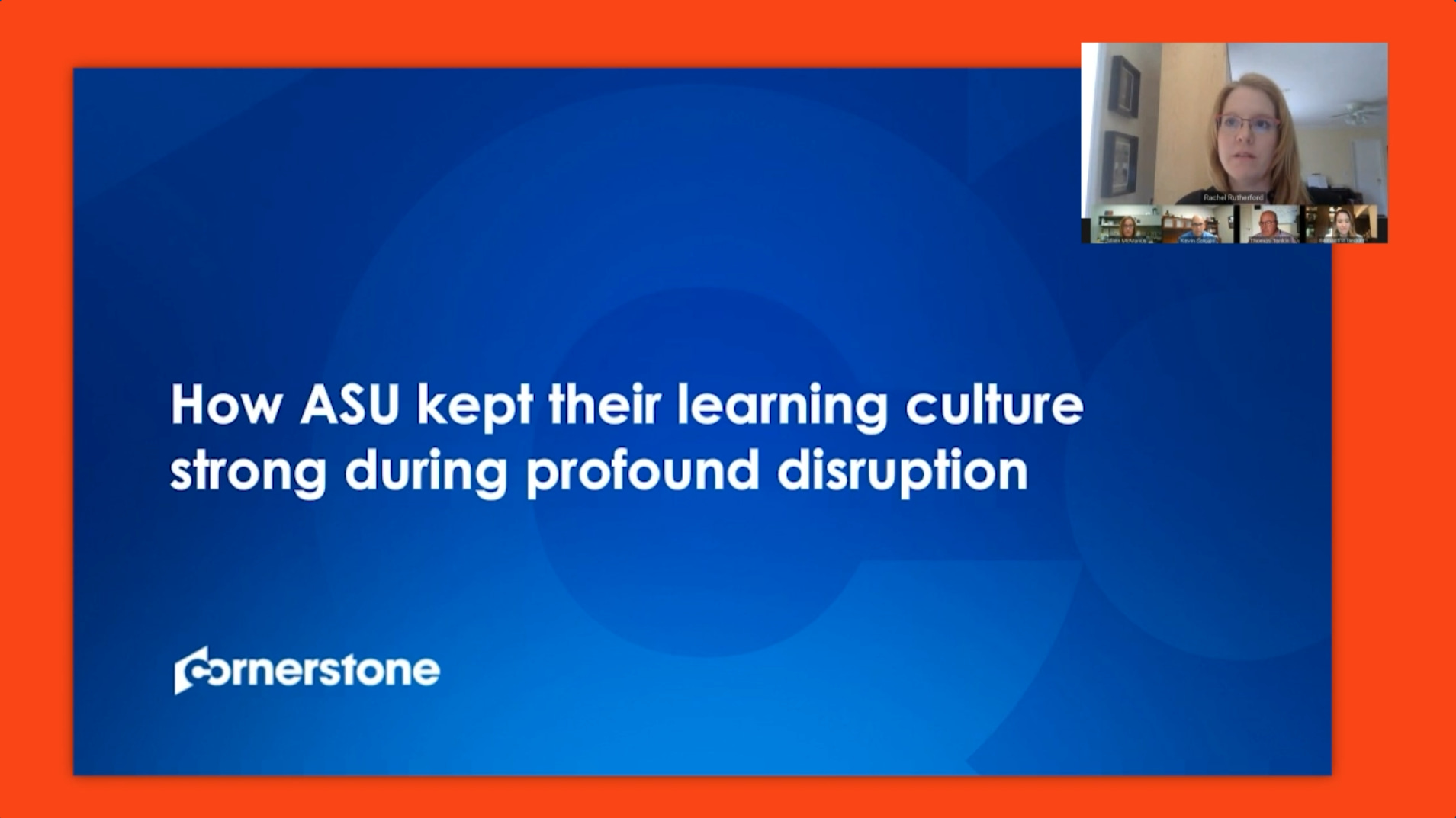
Webinar Recap: How ASU Sustained Its Learning Culture During Profound Disruption
A strong workplace culture is not easy to maintain during “normal” circumstances. According to Gallup, “only 23% of U.S. employees strongly agree that they can apply their organization’s values to their work every day.” During profound disruption, its critical to maintain institutional culture through supportive leadership, empathetic communication and a focus on learning and growth. Join us for a discussion with HR and IT leadership from Arizona State University, detailing their response to disruption, how it caused them to reframe their thinking about training and development for over 30,000 employees, and their plans for maintaining a strong culture into the future. Specifically, you will learn: – How a lean and highly decentralized institution reacted to disruption – How the pandemic impacted their training and development initiatives and cultural philosophy – Leaderships top lessons learned and top 3 priorities for moving into the future How the crisis changed the way they think about HR technology

Toward Gender Diversity: Men and Women are Equal, but not the Same
The gender diversity discussion continues. It also appears that everyone, men and women, want to solve the inequality problem. I sincerely believe that we do; however, before we can solve this problem, we must first must define the problem. You see, I believe we have a fundamental, semantic problem that needs exposure before proceeding. Men and women are equal, but not the same.

Did You Know That Skills are Not Behaviors?
As Learning and Development professionals, one of the big distinctions we need to make when developing training is that behaviors and skills are two different yet related constructs. It is teaching a skill that ensures that the future behavior modification will last longer than just trying to modify a behavior. Bandura’s Social Learning Theory (1977) argues that one way we learn is through mere observation but also warns that this may be pure mimicking, void of context and social sensitivity. A great example is how a child learns from observation. A little boy sees his father grab a beer from the fridge after a long day mowing the grass. The child sees this and is compelled to do the same after he does his chores. One can easily see the issues here. This is observational learning and reinforced through mimicking.
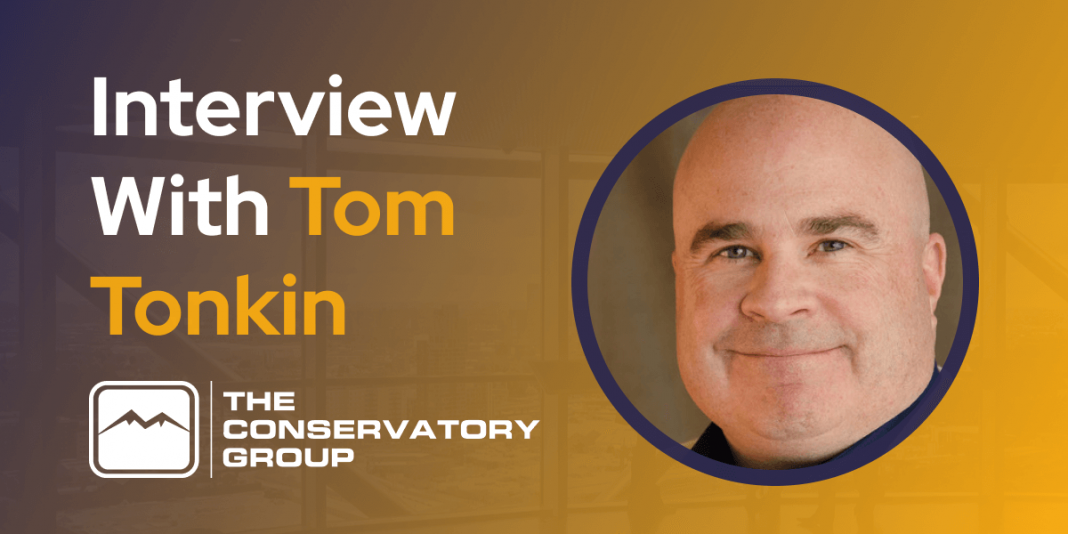
CXBuzz Interview With Tom Tonkin CEO at The Conservatory Group
I have been in the technology and services space for the better part of 30 years. I currently have a few roles. I’m the Conservatory Group’s CEO, an umbrella company for several various ventures that span both high touch management consulting and online sales practices.

Just Because You Can, Does Not Mean You Should
Many have used this quote in books, movies, and even the apostle Paul in the Bible. CRISPR technology allows scientists to alter our DNA sequences and modify gene function. Think of this technology as the ability to edit genes. The practical application might be to eradicate diseases, viruses, and human defects such as Down syndrome.
Just Because You Can, Does Not Mean You Should
Dr. Tom Tonkin, Ph.D. is the Chief Research and Knowledge Officer of DiversityEquityInclusion.com, a division of The Lideranca Group, Inc. It’s been called “the slap heard around the world.” Candidly, I don’t watch much television, and I’m not versed in pop culture regarding TV shows and movies, nor do I look to Hollywood as my moral compass. However, I didn’t have to go and watch the Oscars to see this particular event show up in my news feed and all of the fuss that came with it.

Jurassic Park Revisited: When Will We Hit the Wall with Artificial Intelligence?
As I imagine, we got some traction on the latest blog post, “Just because you can, doesn’t mean you should.” Thus, we have a part two to this discussion to open up the topic and let it breathe. Please join me and take a swig…. When you decide to buy a car and have a model and color picked out, the next thing you notice is that everyone seem to be driving that same model. They even seem to like the color you chose the best! This is called the Baader-Meinhof phenomenon; or more commonly, the frequency illusion. Sorry to say, no one is impressed with your choice of transportation.